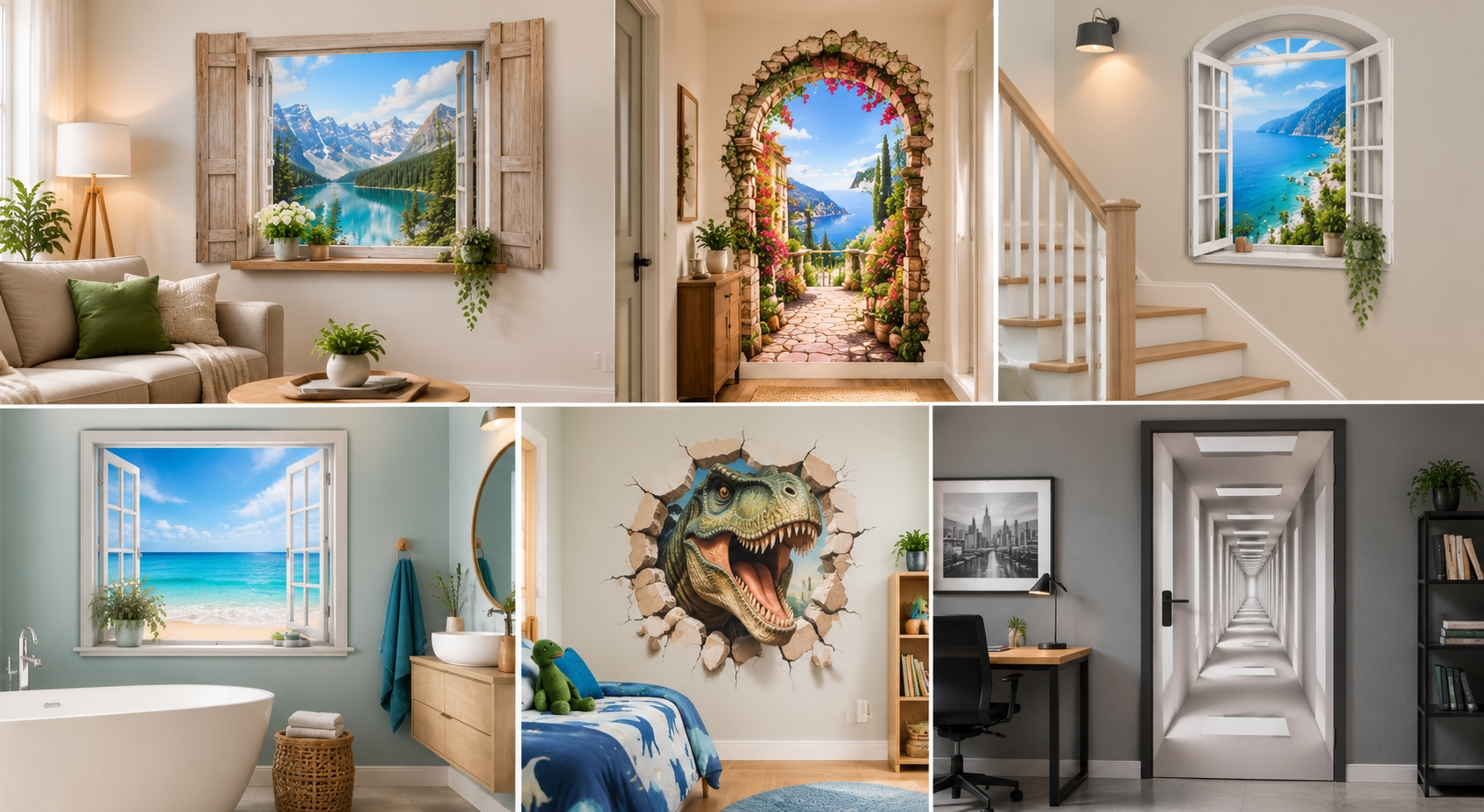

Optical Illusion Wall Decals: How 3D Effects Trick the Eye
Some wall decorations make you smile. Others make you stop, look again and wonder whether the wall is really flat. Optical illusion wall decals belong to the second group. With nothing more than a printed sheet of vinyl, they can open a hole in the plaster, add a window where there is none or make a pattern seem to move. This guide explains how these illusions work, which types suit which rooms and how to place them so the effect is as convincing as possible.
How a flat decal creates depth
Our brains use a handful of visual clues to judge depth: shadows, perspective lines that meet in the distance, objects that overlap, and details that become smaller and paler as they get further away. Painters have used these clues for centuries in a technique called trompe l’oeil, French for “deceive the eye”. A 3D illusion decal works the same way. The designer adds realistic shadows under a broken edge, draws bricks that shrink towards a vanishing point or places a view behind a window frame, and the eye fills in the rest.
There is one important limit: the illusion is strongest from the point of view it was designed for. Seen from the side or from very close, any trompe l’oeil becomes a flat image again. That is not a flaw, but it is the key to placing your decal well.
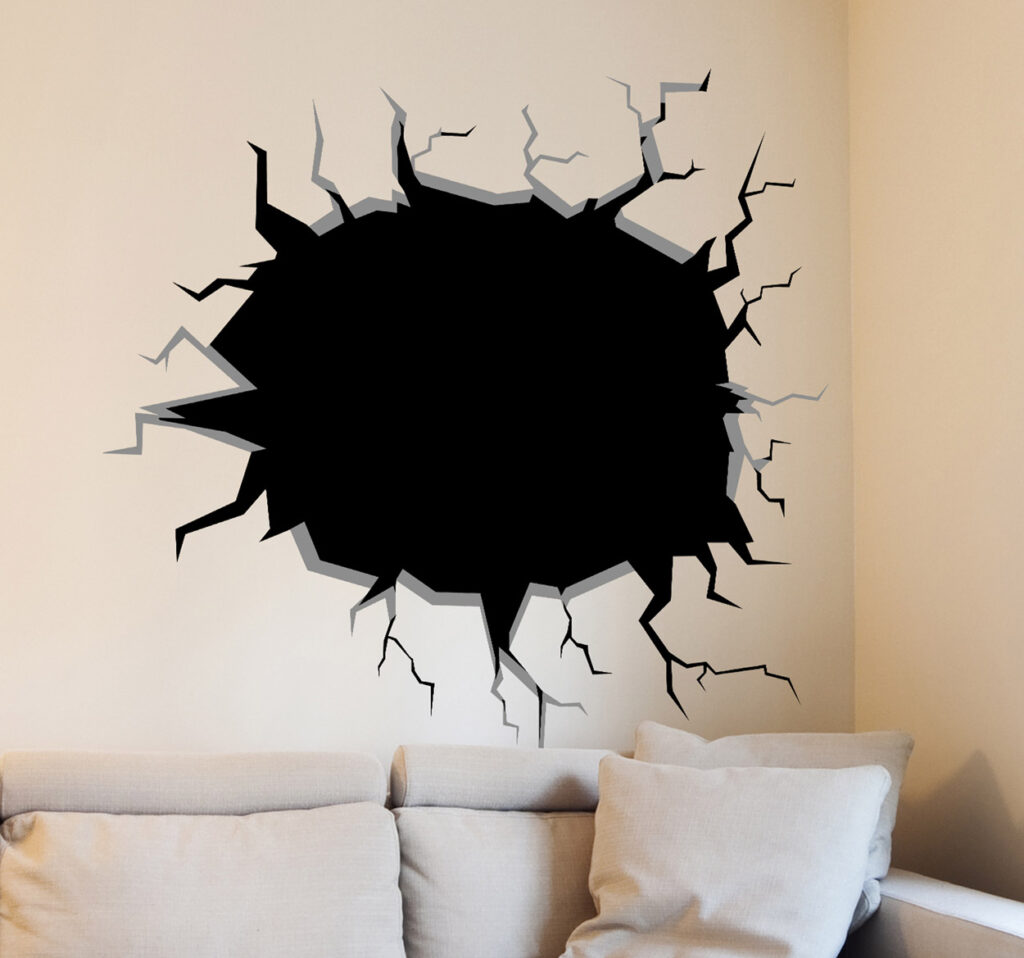
Hole in the wall 3d wall sticker
Choosing the right spot
Think about where people will first see the decal. The wall facing the entrance of a room, the end of a corridor and the space above a staircase are ideal, because visitors see the illusion suddenly and from a natural distance. Next, consider the height. A real window sits above furniture, a fireplace sits on the floor, and a hole made by a playful animal often appears near the baseboard. Placing the decal where the real object would be is the single most effective way to make it believable.
Light makes the illusion
Lighting can strengthen or ruin a 3D effect. Printed shadows look most natural when the real light in the room comes from roughly the same direction. If the shadows in the design fall to the right, a lamp or window on the left of the decal reinforces the illusion. On the other hand, a strong spotlight shining straight at the decal flattens it. Matte finishes help too, because they avoid reflections that remind the viewer they are looking at a printed surface.
Size and surroundings
A convincing illusion respects real-world scale. A fake window should be about the size of a real one, and a fireplace should fit the proportions of the room. Leave some empty wall around the decal so it reads as part of the architecture rather than as a picture. Small real details can also complete the scene: a curtain rail above a fake window, a basket of logs in front of a fireplace decal or a shelf below a window view.
Optical illusions in different rooms
In the living room, a fireplace or a large window view becomes a focal point and makes the space feel warmer or bigger. In hallways, a broken-wall effect or a doorway onto a garden turns a dull passage into a talking point. Offices and studios suit geometric illusions, which add energy without being childish. In bathrooms, a window onto the sea brings light to a room that often has none. Kids’ rooms, finally, are where the most playful designs shine: dinosaurs, sharks and secret passages.
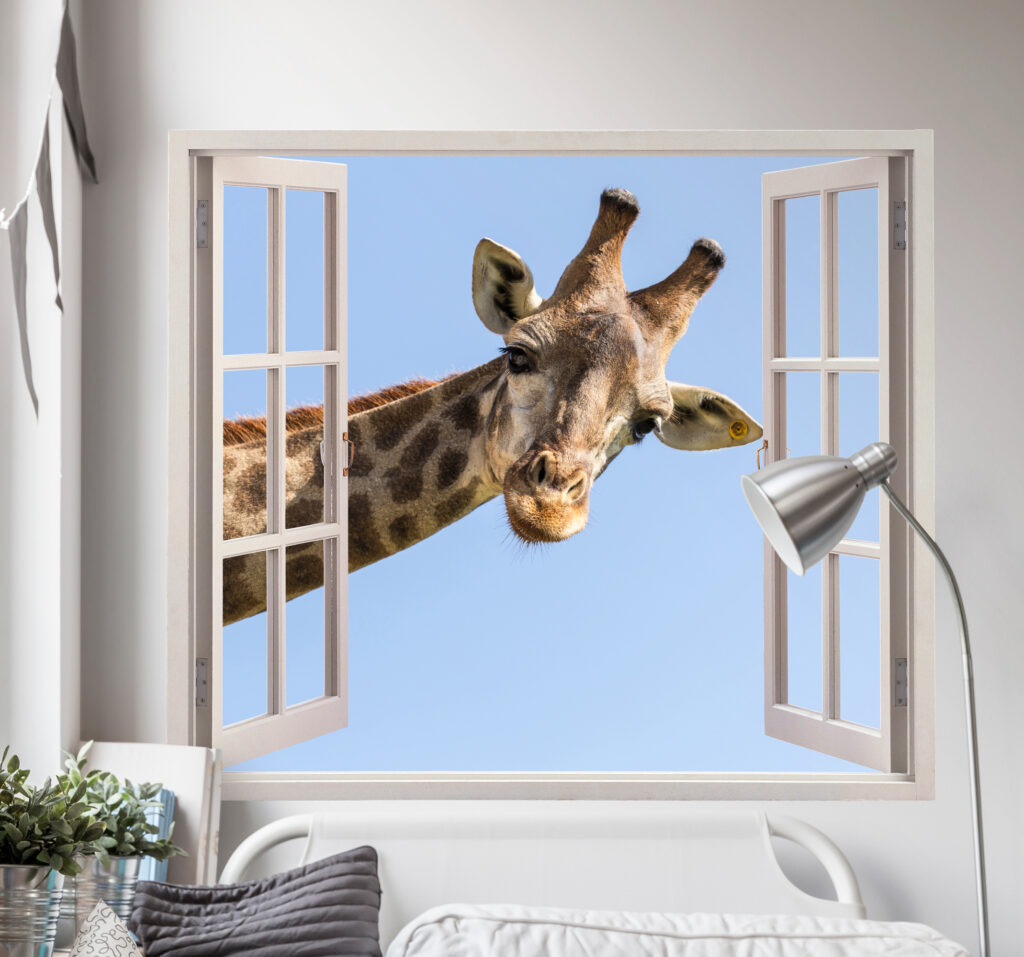
Giraffe through a window 3d animal wall sticker
Common mistakes to avoid
A few mistakes are easy to make. Placing a decal too high or too low breaks the sense of reality. Choosing a size that is too small makes the effect look like a sticker rather than an opening. Putting the design on a textured or uneven wall distorts the lines. Finally, surrounding the illusion with too many other decorations distracts the eye from the effect.
A small trick with a big impact
Optical illusion wall decals are one of the simplest ways to surprise guests and give a room character. Understand how the effect works, place it where a real object would be, respect the scale and use the light in your favor. With those principles in mind, a flat wall can become the most talked-about feature in your home.