
Door Wallpaper vs Door Murals: Which One Should You Choose?
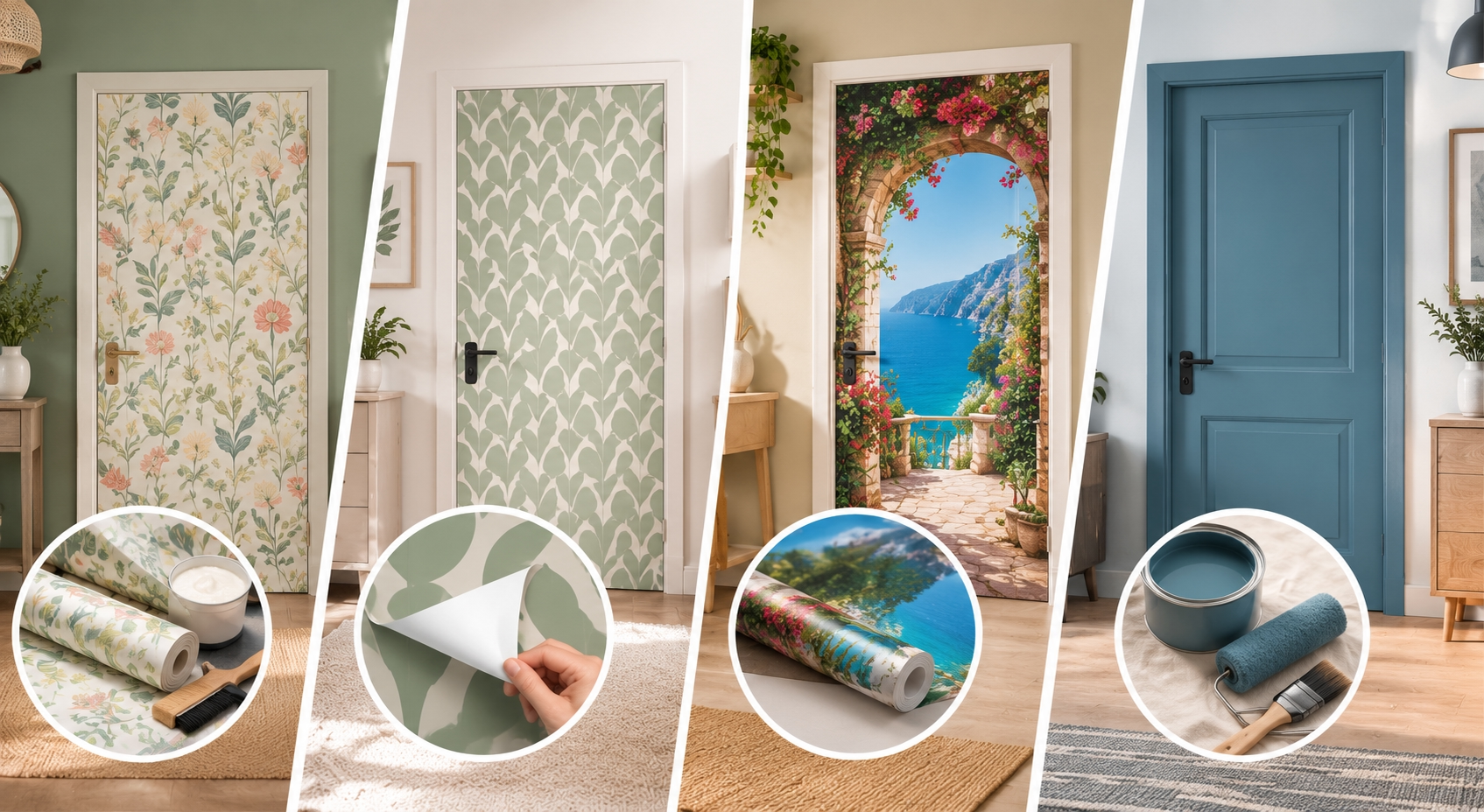
Wallpapering a door has become a popular way to add pattern and color to a room, and searches for door wallpaper keep growing. Yet there is more than one way to cover a door: traditional wallpaper, peel-and-stick wallpaper, printed door murals and good old paint. Each option has strengths and limits. This guide compares them, so you can choose the one that fits your door, your budget and how long you want the new look to last.
Traditional wallpaper on a door
Traditional wallpaper is applied with paste, either on the paper or on the door. It offers a huge choice of patterns and textures, and on a flat door the result can be beautiful. However, it is not the easiest material to work with on a surface that moves and gets touched every day. You need to cut the paper precisely around the edges and the handle, smooth it while the paste is wet, and seal the edges so they do not lift. Removing it later usually means soaking and scraping, which can damage the paint underneath.
Colorful wildflowers door sticker
Peel-and-stick wallpaper
Peel-and-stick wallpaper comes in rolls with an adhesive backing. It is easier than traditional wallpaper, because there is no paste and you can reposition it during application. On the other hand, most rolls are made for walls, so you usually need to join two strips on a door and match the pattern across the seam. On a narrow door, that seam often ends up in the middle, where it is very visible.
Printed door murals
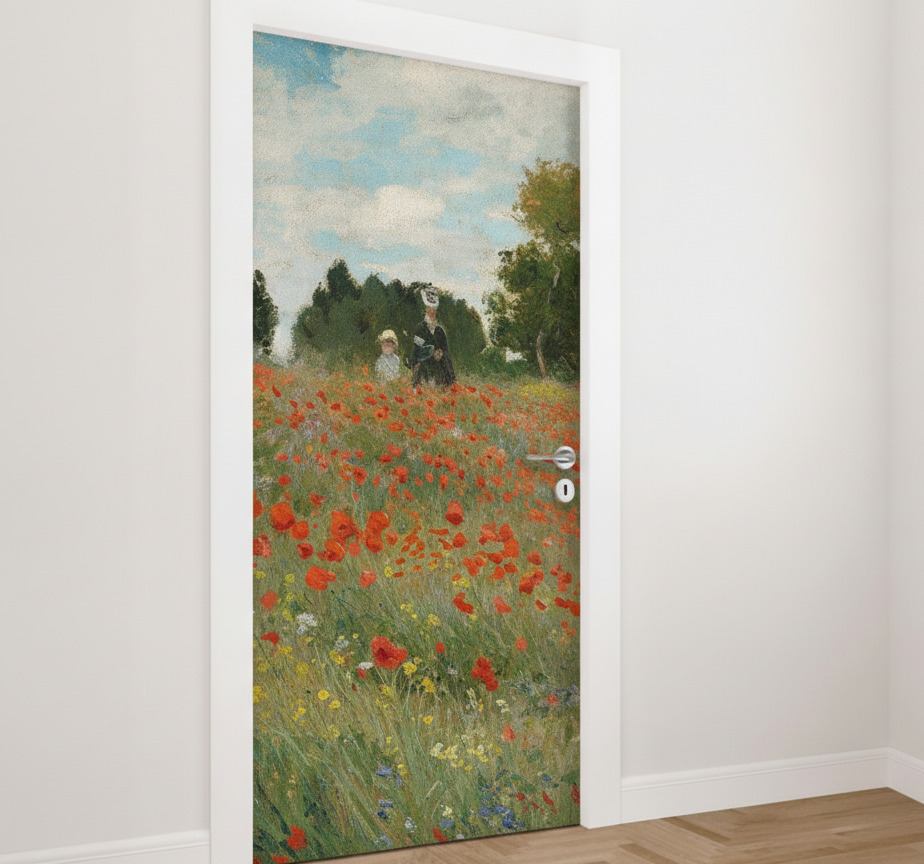
A door mural is a single printed panel made to the size of the door. Because it is one piece, there are no seams and no pattern matching. It can show a photo, a landscape, a trompe-l’œil effect or an illustration that would be impossible with ordinary wallpaper, such as an open doorway onto the sea or a bookcase full of old books. Most door murals are self-adhesive vinyl, so they apply like a large sticker and can be removed when you want a change. The main limit is size: you need to measure the door carefully and order the right dimensions.
Paint
Paint remains the cheapest way to change the color of a door. It is also the most permanent and the most work: you need to clean, sand, prime and apply at least two coats, then wait for the paint to cure. Paint is perfect for a solid color, but anything more complex, such as stripes, geometric patterns or a picture, requires skill and patience.
Which option suits your door?
If you want a solid color and you own your home, paint is hard to beat on price. For a classic floral or damask pattern on a flat door, traditional wallpaper still has its charm, as long as you are patient. If you rent, or if you like to change your décor often, removable options make more sense. Between those, peel-and-stick wallpaper is fine for repeating patterns on wide doors, while a printed door mural is the better choice for photos, landscapes, illusions and narrow doors, because it covers the whole surface in a single seamless piece.
What about doors with panels?
Many interior doors have raised or recessed panels. Wallpaper and vinyl both follow the flat areas well, but the edges of the panels will show as lines in the design. There are two ways to deal with this. You can choose a busy pattern, such as leaves, flowers or a geometric print, which hides those lines naturally. Alternatively, you can decorate each flat panel separately, leaving the frame of the door in its original color for a tailored look.
Tips for a professional finish
Whatever you choose, preparation decides the result. Clean the door with mild soap and water, let it dry completely and remove the handle if you can. Measure the door leaf, not the frame, and check whether the door is perfectly rectangular. When you apply any covering, work from the top down and from the center outwards to avoid bubbles. Finally, give the edges extra attention, because they are where everyday wear begins.
The bottom line
Door wallpaper and door murals are both great ways to turn a plain door into a feature. Choose traditional wallpaper for classic patterns, peel-and-stick wallpaper for budget-friendly repeats, paint for solid colors, and a printed door mural when you want a seamless photo or illusion that you can remove later. Knowing the strengths of each option is the best way to avoid a door makeover you regret.